


High security locks miami beach hotels depend on are the first line of defense against unauthorized access, liability claims, and guest safety incidents. Miami Beach’s non-stop hospitality scene demands lock systems that can handle thousands of daily entries while meeting Florida’s strict building codes.
In this guide, you’ll learn which lock systems perform best in South Beach’s demanding environment, how the installation process works, and how to compare your options — so you can protect guests, staff, and your property’s reputation.
Why Miami Beach Hotels Need High Security Locks
When it comes to the advanced locking systems Miami Beach properties must prioritize, the stakes are uniquely high. Miami Beach draws millions of visitors each year, and that foot traffic creates real security challenges for hotel operators.
The Unique Security Risks Hotels Face
Hotels are not like other buildings. Hundreds of guests, staff members, and vendors move through the same doors every day. Because of this constant flow, standard locks simply cannot keep up.
Consider what’s at play:
- Guest valuables — jewelry, electronics, cash, and passports
- Multiple access points — lobbies, service entrances, pool areas, and parking garages
- High staff turnover — keys and credentials change hands frequently
- Liability exposure — a single security breach can trigger costly legal claims
In fact, the FBI’s Uniform Crime Report consistently shows that hotels and lodging properties face elevated theft and burglary rates compared to other commercial buildings.
Miami Beach Adds Extra Pressure
South Beach is a 24/7 environment. Nightlife, tourism, and luxury amenities attract large crowds around the clock. As a result, hotel security systems face stress that most commercial properties never experience.
Miami-Dade County also has specific building and fire codes that affect how access control systems must be installed. Hotels that ignore these rules risk fines and failed inspections.
Why Standard Locks Fall Short
Basic pin tumbler locks are easy to pick, bump, or copy. For a busy hotel, that’s a serious problem. However, advanced locking systems use features like:
- Restricted keyways that prevent unauthorized duplication
- Anti-pick and anti-drill pins for physical attack resistance
- Audit trail capabilities to track who accessed which door and when
These features matter most in high-traffic commercial settings. For a deeper look at how commercial-grade security works, explore our commercial security solutions and commercial building security challenges resources.
Protecting Guests Builds Your Reputation
Finally, security is a business asset. Guests who feel safe leave better reviews. Better reviews drive higher occupancy. Strong locks are not just a safety measure — they are a competitive advantage.
Types of Hotel Lock Systems South Beach Properties Rely On
Understanding which lock categories are available today helps hotel operators make smarter decisions. Each type serves a different need — from guest room access to back-of-house staff control.
Electronic RFID and Key Card Locks
RFID key card systems are the most common choice for guest rooms. They let staff deactivate a lost card instantly, which cuts liability fast.
Key benefits include:
- Instant card deactivation — no rekeying needed
- Audit trails — logs show who entered and when
- Low guest friction — familiar and easy to use
- Master hierarchy — housekeeping, management, and security each get different access levels
In fact, most major hotel brands now require RFID systems as a brand standard.
Deadbolts and High-Grade Mortise Locks
For service corridors, utility rooms, and back-of-house areas, heavy-duty mortise locks are the top pick. These locks resist forced entry far better than standard commercial locks.
Specifically, look for locks graded to ANSI/BHMA Grade 1, the highest standard for commercial hardware. Grade 1 locks withstand over 250,000 open-close cycles.
Smart Locks and Mobile Access
Smart locks are growing fast in boutique and luxury properties. They allow:
- Smartphone-based check-in
- Remote access management
- Real-time alerts for unusual entry attempts
- Easy integration with property management software
For more on smart access options, see our guide to commercial security systems.
Electromagnetic and Panic Hardware
High-traffic exits need electromagnetic locks paired with panic bars. These meet NFPA 101 Life Safety Code requirements — critical for any Florida hotel.
Biometric Locks for Restricted Areas
Biometric locks use fingerprints or retina scans. Hotels use them in server rooms, cash offices, and executive areas. However, they carry a higher upfront investment, placing them in the upper-tier to premium-tier range.
For a deeper look at your options, explore our security locks resource page.
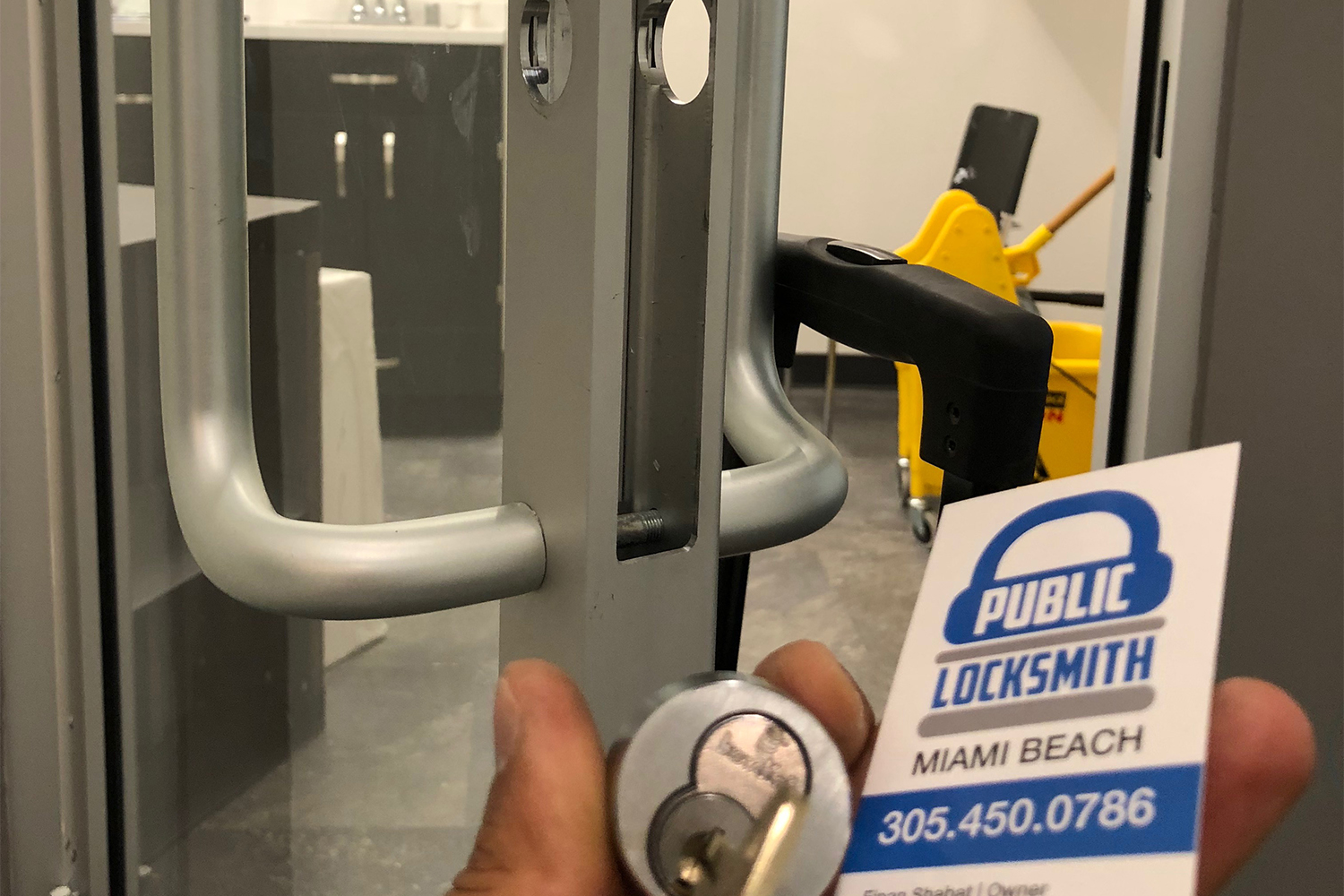
Hotel Lock Installation and Upgrade Process in Miami Beach
Planning a hotel lock upgrade in Miami Beach takes careful coordination. Hotels can’t afford long downtime. A smooth process protects guests and keeps operations running.
Step 1: Security Assessment
First, a certified locksmith inspects every entry point. This includes guest rooms, stairwells, service corridors, and pool access gates. The goal is to find weak spots before selecting hardware.
Key assessment checkpoints include:
- Door frame condition — damaged frames reduce even the best lock’s effectiveness
- Current access control gaps — outdated keycards or worn cylinders
- High-traffic zones — lobbies and elevators need heavy-duty hardware
- Emergency exit compliance — Florida fire codes require specific panic hardware
Step 2: System Selection and Planning
Next, the locksmith works with hotel management to choose the right system. Options range from entry-tier mechanical upgrades to premium-tier electronic access platforms. For larger properties, a commercial security solution ties everything into one managed network.
Also, staff access levels must be mapped out in advance. Housekeeping, maintenance, and management each need different permissions.
Step 3: Phased Installation
Because hotels operate 24/7, installation happens in phases. Technicians work floor by floor, often overnight, to avoid disrupting guests.
A typical phased rollout looks like this:
- Install new hardware on unoccupied floors first
- Test each lock before moving to the next zone
- Program keycards or digital credentials
- Train front desk and security staff on the new system
Step 4: Testing and Staff Training
Finally, every lock gets tested under real conditions. Technicians check battery life, signal strength for wireless systems, and emergency override functions.
Staff training is equally important. In our experience, commercial locksmith professionals recommend at least two training sessions — one for daily operations and one for emergency protocols.
Ongoing Maintenance
Hotel lock systems need regular servicing. Specifically, electronic locks should be audited every 6 to 12 months. Mechanical locks benefit from annual lubrication and cylinder inspections.
A proactive maintenance schedule prevents costly failures and keeps your property compliant with Miami-Dade safety standards.
Comparing Lock Systems for South Beach and Miami-Dade Hotels
Not all hotel lock systems are built the same. Comparing security options across South Beach and inland Miami-Dade properties reveals clear differences in needs, features, and priorities.
South Beach properties face unique pressures. High foot traffic, saltwater air, and a global guest mix demand locks that are both durable and smart. Inland Miami-Dade hotels often prioritize budget flexibility and simpler access management.
Lock System Comparison Table
| Lock Type | Best For | Key Feature | Tier |
|---|---|---|---|
| RFID Key Card | Guest rooms, all hotel sizes | Instant deactivation + audit trail | Standard to mid-tier |
| Mechanical High-Security (Mul-T-Lock/Medeco) | Back-of-house, service areas | Restricted keyway, drill/pick resistance | Mid to upper-tier |
| Smart / Mobile Access | Boutique and luxury properties | Remote management, smartphone entry | Upper-tier |
| Electromagnetic + Panic Hardware | Exit corridors, ballrooms | Life-safety code compliance | Mid-tier |
| Biometric | Server rooms, cash offices | Fingerprint/retina — no key risk | Premium-tier |
Why South Beach Demands More
South Beach hotels see thousands of guest turnovers each year. Because of this, electronic RFID and mobile-credential systems are nearly standard. Also, the Americans with Disabilities Act requires accessible entry solutions — a factor both markets must address.
Corrosion is a real threat near the ocean. For example, standard steel hardware can degrade quickly in salt air. As a result, South Beach properties lean toward marine-grade or stainless-steel lock bodies.
Where Miami-Dade Inland Hotels Have Flexibility
Inland properties still need strong security. However, they often have more room to phase upgrades over time. Standard-tier electronic locks may serve smaller boutique hotels well, while larger convention properties typically move toward upper-tier or premium-tier systems.
Key considerations for any Miami-Dade hotel include:
- Guest volume — higher traffic means faster hardware wear
- Brand standards — franchise flags often mandate specific lock grades
- Integration needs — does your PMS (property management system) support the lock platform?
- Local compliance — Miami-Dade County building codes may affect installation requirements
For a deeper look at your options, explore traditional locks vs digital locks and the pros and cons of keyless door locks.
FAQ: High Security Locks for Miami Beach Hotels
Conclusion: Secure Your Miami Beach Hotel with High Security Locks
Every Miami Beach hotel deserves locking systems that match the demands of a world-class hospitality destination. The right hardware protects guests, reduces liability, and gives your property a competitive edge that guests notice and appreciate.
Why Acting Now Matters
Miami Beach sees millions of visitors each year. More foot traffic means more risk. However, the right lock system turns that risk into a manageable challenge.
Here is what strong hotel security delivers:
- Fewer unauthorized entries and reduced liability exposure
- Faster staff response with master key and access control systems
- Guest confidence that drives better reviews and repeat bookings
- Lower insurance costs over time with documented security upgrades
Your Next Step
First, schedule a professional security audit. Next, review your current locks against commercial-grade standards. Finally, work with a licensed locksmith to build a layered system that fits your property.
Public Locksmith Inc. serves hotels and hospitality properties across Miami Beach, South Beach, Miami, Aventura, Pinecrest, and Miami-Dade County. Our team understands the unique demands of South Beach properties and the compliance standards that matter most in Florida.
Ready to upgrade? Contact us today to protect your guests, your staff, and your reputation.
📍 Public Locksmith Inc. | Miami Beach, FL | 📞 (305) 450-0786